


Powering Delivery in a Grid-Constrained World: How the Right Workforce Keeps E&P Projects Moving

The UK energy transition is accelerating – but delivery pressure is rising


Across the UK, Energy & Power projects are moving at pace. Wind, solar and EV infrastructure are scaling rapidly, investment is strong, and project pipelines are growing. At the same time, grid constraints, planning delays and skills shortages are placing unprecedented pressure on delivery teams.


For developers, EPCs and asset owners, success now depends on more than technology and capital. It depends on access to compliant, experienced professionals who understand how to deliver safely, efficiently and at scale.


This is where strategic workforce planning becomes a differentiator rather than a support function.


Why workforce strategy is now a critical risk factor


Energy & Power projects are increasingly complex. Multi-site delivery, overlapping programmes and accelerated timelines mean that workforce gaps can quickly turn into programme delays or safety risks.


Common challenges we see across wind, solar and EV infrastructure projects include:


  • Shortages of experienced electrical and commissioning professionals
  • Increased competition for supervisors and project management capability
  • Inconsistent compliance standards across subcontract labour
  • Limited visibility of future workforce demand during early project phases


When workforce planning is reactive, projects feel it first through productivity, then through cost.


A proactive, sector-specialist approach reduces risk long before boots are on the ground.


The value of specialist, compliant E&P talent


Energy & Power delivery demands professionals who understand more than their trade. They need experience of live environments, regulatory requirements and the safety culture expected on modern infrastructure projects.


For example, in wind and solar developments, this may include:


  • Electrical supervisors with experience of grid connections and energisation
  • Site managers familiar with renewable construction sequencing
  • Commissioning engineers who understand asset performance as well as handover


In EV infrastructure, delivery teams must balance speed of rollout with safety, quality and public-facing environments.


Deploy works with clients to plan, supply and manage specialist E&P professionals who are:


  • Fully compliant and safety-led
  • Experienced in live project environments
  • Matched to the technical and cultural demands of each site


This reduces onboarding time, improves site integration and supports consistent delivery across programmes.
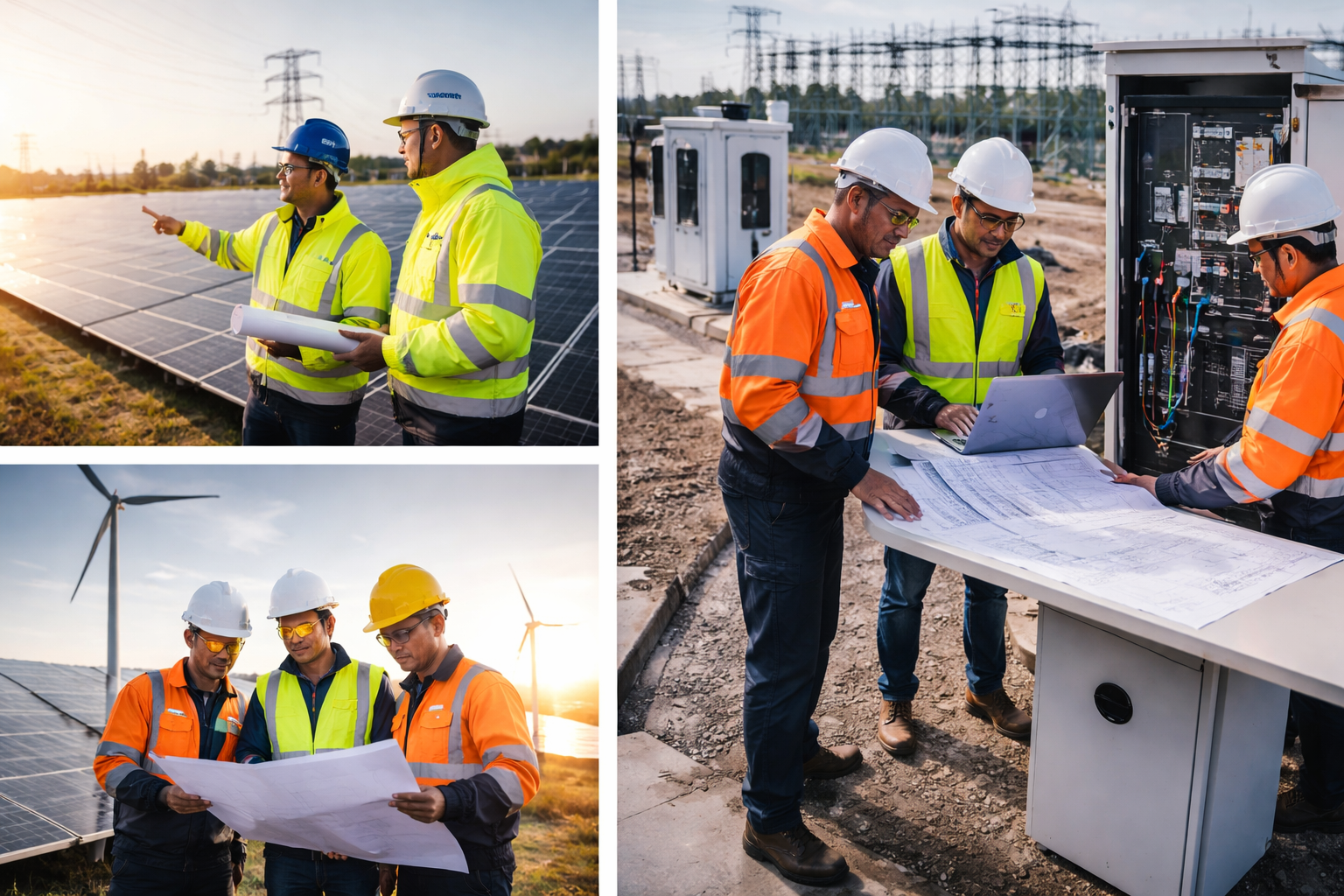
Engineers in safety vests and hard hats reviewing plans at solar and wind energy sites.

Early engagement delivers better outcomes


One of the most effective ways to protect programme certainty is to engage workforce partners early.


When Deploy is involved during pre-construction or early planning stages, clients benefit from:


  • Clear insight into market availability and lead times
  • Realistic workforce phasing aligned to programme milestones
  • Early identification of high-risk or hard-to-source roles
  • A scalable delivery plan that supports growth without disruption


This approach is particularly valuable for clients delivering multiple renewable energy or EV rollout projects in parallel, where consistency and repeatability are critical.


Safety, compliance and continuity at the centre of delivery


Safety remains non-negotiable across Energy & Power. As project volumes increase, maintaining consistent standards across all resources becomes more challenging.


Deploy acts as an extension of our clients’ teams, ensuring that every professional supplied meets agreed compliance, safety and competency standards. Our focus on long-term collaboration means we prioritise continuity, not quick fixes.


This creates:


  • Safer sites
  • More stable delivery teams
  • Reduced management burden for client project leads


In an environment where reputational risk is as significant as commercial risk, this consistency matters.


Building long-term workforce solutions for a changing energy system


The UK’s energy infrastructure will continue to evolve. Grid upgrades, battery storage, renewable expansion and EV adoption will place ongoing demand on specialist skills.


Clients who succeed will be those who view workforce strategy as part of their wider delivery model, not a standalone requirement.


Deploy supports this by providing:


  • Sector-expert insight into Energy & Power labour markets
  • Technology-driven workforce planning and mobilisation
  • Long-term collaboration that supports repeat projects and frameworks


Our role is to help clients deliver today’s projects while building resilience for tomorrow’s demands.


Looking ahead


The energy transition is not slowing down. The pressure to deliver safely, efficiently and at scale will only increase.


With the right strategic delivery partner, workforce challenges become manageable, predictable and aligned with programme success.


Deploy is proud to support Energy & Power clients across wind, solar and EV infrastructure, planning, supplying and delivering specialist, compliant professionals who keep projects moving.


If you are planning upcoming E&P works or scaling delivery programmes, get in touch to discuss how we can support your workforce strategy.



April 16, 2026
Many highly capable engineers struggle with the same frustrating experience: submitting multiple job applications but receiving little or no response. In most cases, the issue is not a lack of experience or capability, it is how that experience is presented on the CV. Today, recruitment processes are more structured and technology-driven than ever before. Employers and recruiters often rely on Applicant Tracking Systems (ATS) to filter applications before they are reviewed by a hiring manager. If your CV is not optimised for these systems or does not clearly demonstrate your impact, it may never reach the decision-makers. Understanding how to structure your CV effectively is one of the most important engineering CV tips for professionals who want to stand out in a competitive job market. Below are several practical strategies that can help ensure your CV gets noticed. Understand How ATS Systems Filter Engineering CVs Many infrastructure, manufacturing, and technology organisations now use ATS platforms to manage large volumes of job applications. These systems scan CVs for specific keywords related to the role before passing shortlisted candidates to recruiters. If your CV does not include relevant CV keywords for engineering jobs, the system may automatically filter it out, even if you are technically qualified for the role. For example, a job description for a rail infrastructure engineer may include keywords such as: rail systems integration safety compliance signalling systems project delivery asset management If these terms do not appear within your CV, the ATS may assume you lack the required experience. Keyword optimisation ensures your CV aligns with the terminology used in job descriptions. Carefully reviewing the language in job advertisements and incorporating relevant technical keywords can significantly increase your chances of passing the initial screening process. Move Beyond Task-Based Descriptions One of the most common mistakes in engineering CVs is relying on task-based descriptions. Many candidates list responsibilities such as: Responsible for project planning Assisted with safety reporting Managed site documentation While these statements describe activities, they do not demonstrate the value or results you delivered. Recruiters and hiring managers are far more interested in outcomes. Instead of describing tasks, focus on how your work contributed to project success, operational improvements, or risk reduction. For example: Task-based description: Responsible for safety documentation on infrastructure projects. Results-based description: Implemented improved safety reporting procedures that reduced site incidents and strengthened regulatory compliance. This shift from duties to achievements is essential when creating an effective infrastructure CV example that captures recruiter's attention. Write Using Results-Based Language Strong CVs clearly demonstrate how your work contributed to project delivery, efficiency improvements, or operational success. Results-based writing highlights your impact by answering key questions such as: What problem did you solve? What improvement did you introduce? What measurable outcome resulted from your work? For example: Led the implementation of digital reporting systems that improved project visibility across multidisciplinary teams. Optimised maintenance scheduling processes, reducing asset downtime and improving operational efficiency. Delivered infrastructure upgrades while maintaining full safety compliance across high-risk environments. These types of statements show recruiters that you are not only capable of completing tasks; you are capable of driving meaningful outcomes. Tailor Your CV for Different Engineering Sectors Another common issue is using a generic CV for every job application. Engineering roles across sectors such as rail, manufacturing, and technology often require different expertise. Tailoring your CV to match the industry you are applying to can significantly improve your chances of success. For example: Rail Infrastructure Roles Focus on: Safety-critical project environments Rail systems integration Signalling or asset management experience Compliance with industry standards Manufacturing Roles Highlight: Process optimisation Automation systems Production efficiency improvements Equipment maintenance strategies Technology or Digital Infrastructure Roles Emphasise: Systems integration Data analytics or digital tools Cloud infrastructure or digital platforms Cross-functional project collaboration Customising your CV demonstrates that you understand the specific demands of each industry and are prepared to contribute effectively. Bonus: Use Powerful Action Terms Strong action verbs help your achievements stand out and communicate leadership, initiative, and impact. Consider incorporating powerful action terms such as: Delivered complex infrastructure upgrades within strict project timelines Implemented digital monitoring tools that improved operational visibility Led multidisciplinary engineering teams during major project phases Reduced risk through improved safety and compliance procedures Improved compliance by strengthening reporting frameworks and documentation processes Optimised performance of systems or assets through technical innovation Using clear, action-oriented language helps recruiters quickly understand your contributions and capabilities. Make Your Experience Work Harder on Paper A strong engineering CV does more than list your work history, it communicates the value you bring to complex projects and technical teams. To ensure your CV gets noticed, focus on: Optimising keywords for ATS systems Writing achievement-based descriptions instead of task lists Tailoring your CV to the specific engineering sector Using clear, results-focused action language When done correctly, your CV becomes a powerful tool that demonstrates both your technical expertise and your impact on project delivery. Connecting Engineers with the Right Opportunities At Deploy , we work closely with infrastructure, engineering, and technology professionals to help them present their experience in the most compelling way possible. Our team understands what employers look for when reviewing CVs and how candidates can highlight the skills that matter most in today’s engineering job market. Whether you are looking to refine your CV, prepare for interviews, or explore new career opportunities, Deploy can help connect you with the right roles and provide guidance on how to position your expertise effectively. If you are ready to take the next step in your engineering career, connect with Deploy and discover opportunities where your skills and experience can truly make an impact.
April 14, 2026
Railway infrastructure projects are among the most complex engineering programmes in the world. From modernising signalling systems to delivering new high-capacity rail networks, these initiatives require coordination across multiple technical disciplines, regulatory frameworks, and operational environments. Unlike many other infrastructure sectors, rail projects operate in safety-critical environments where system failures are not an option. Every decision from design and testing to installation and maintenance, must meet strict regulatory and operational standards. For professionals working in rail delivery, success depends on more than technical knowledge. It requires a combination of railway project management expertise, systems thinking, and the ability to collaborate across large multidisciplinary teams. Below are the core skills every rail professional must master to effectively manage complex rail projects. Systems Thinking: Understanding the Bigger Rail Network Railway infrastructure is not a collection of isolated components. It is a highly integrated system where signalling, rolling stock, track infrastructure, electrification, and communication networks must operate seamlessly together. Professionals involved in rail systems engineering must adopt a systems-thinking mindset. This means understanding how individual design or operational decisions affect the wider network. For example, a change in signalling technology may impact: Train control systems Platform operations Safety procedures Passenger flow management Professionals who can evaluate these interconnected impacts are highly valued in managing complex rail projects. Employers increasingly look for candidates who demonstrate the ability to think beyond their specific technical discipline and understand the broader rail ecosystem. Risk Management in Safety-Critical Environments Rail projects involve significant technical, operational, and regulatory risks. Engineers and project managers must constantly identify, assess, and mitigate potential risks before they escalate into operational disruptions. Effective railway project management requires professionals who understand how to manage risks such as: Safety hazards during construction or maintenance Delays caused by system integration challenges Regulatory compliance failures Budget and scheduling pressures Risk management in rail projects often involves structured frameworks, rigorous safety reviews, and continuous monitoring of project progress. Professionals who can demonstrate experience with risk identification, mitigation planning, and incident prevention bring substantial value to infrastructure programmes. Stakeholder Coordination Across Complex Teams Large rail programmes often involve dozens of stakeholders, including contractors, engineers, regulators, government agencies, and operational teams. Coordinating these groups requires strong communication and organisational capability. Rail professionals must ensure that everyone involved in the project understands timelines, technical requirements, and compliance obligations. Successful professionals in safety-critical rail careers know how to facilitate collaboration across teams that may have different priorities or operational perspectives. For example, a rail signalling engineer may need to coordinate with: Civil engineering teams installing track infrastructure Electrification specialists working on overhead systems Regulatory bodies responsible for safety certification Operations teams responsible for maintaining passenger services Professionals who can manage these relationships effectively play a key role in keeping complex rail programmes on schedule. Technical Compliance and Regulatory Knowledge The rail sector operates under strict regulatory frameworks designed to protect passenger safety and operational reliability. Professionals involved in rail systems engineering must understand industry standards, certification requirements, and safety procedures that govern rail infrastructure development. Technical compliance often includes: Adhering to national rail safety regulations Meeting signalling and communication standards Conducting safety assurance and verification processes Ensuring documentation and reporting requirements are met Rail employers prioritise candidates who demonstrate familiarity with regulatory frameworks and safety compliance procedures. This knowledge ensures that projects move through approval processes smoothly and meet operational standards. Resilience Under Pressure Rail infrastructure projects often operate under intense time and performance pressures. Teams must manage complex installations, technical testing phases, and operational deadlines without compromising safety. Professionals who succeed in managing complex rail projects demonstrate resilience during challenging situations. They remain focused when unexpected issues arise, such as technical faults, integration delays, or regulatory concerns. Resilient professionals can: Maintain calm decision-making during disruptions Support teams through high-pressure delivery phases Quickly adapt to evolving project conditions Employers recognise resilience as a critical competency in safety-critical rail careers, particularly for leadership and project management roles. Demonstrating Rail Competencies in CVs and Interviews For candidates pursuing roles in railway infrastructure, demonstrating these competencies clearly in both CVs and interviews is essential. When preparing a CV, professionals should focus on project outcomes rather than job duties. Highlighting measurable achievements, such as successful system integrations, safety improvements, or delivery milestones, helps hiring managers understand the candidate’s impact on complex rail programmes. Candidates should also emphasise: Experience working across multidisciplinary teams Examples of risk management and problem-solving Involvement in safety compliance and regulatory processes During interviews, candidates can strengthen their position by sharing real project scenarios. Describing how they resolved technical challenges, coordinated stakeholders, or navigated high-pressure delivery phases demonstrates the practical skills required for railway project management roles. Supporting Rail Talent and Complex Infrastructure Delivery As rail networks continue to modernise, the demand for professionals who can manage complex infrastructure programmes continues to grow. At Deploy , we specialise in connecting rail and infrastructure organisations with experienced professionals who possess the technical expertise, systems thinking, and leadership skills required to deliver high-stakes projects. Our recruitment approach focuses not only on technical qualifications but also on the behavioural capabilities needed to succeed in safety-critical rail environments. Whether you are a rail professional looking to advance your career or an organisation seeking highly skilled talent for complex rail programmes, Deploy can help you find the right opportunities and the right people to drive project success.
March 30, 2026
Infrastructure has always been an industry built on technical expertise, precision, and experience. For decades, engineers have relied on their understanding of physical systems, bridges, railways, power networks, highways, and industrial facilities, to deliver large-scale projects that shape economies and societies. However, the sector is now undergoing a profound transformation. The rise of digital technologies, data-driven operations, and smart infrastructure systems is reshaping how projects are designed, managed, and maintained. For mid-career professionals, this shift raises an important question: How can experienced engineers remain competitive in a rapidly evolving digital environment? The answer lies in continuous professional development and upskilling for engineers. In today’s infrastructure landscape, technical experience alone is no longer enough. The most successful professionals combine their engineering knowledge with digital fluency, leadership capability, and an openness to learning new systems. Engineers who embrace lifelong learning are positioning themselves to remain valuable contributors in an industry that is changing faster than ever before. Why Digital Transformation Is Reshaping Infrastructure Careers Across the infrastructure sector, digital transformation is redefining how assets are planned, delivered, and operated. Technologies such as Building Information Modelling (BIM), smart sensors, predictive maintenance systems, and advanced analytics are enabling more efficient project delivery and better long-term asset performance. This digital transformation in infrastructure is creating new expectations for engineers. Today’s projects increasingly rely on: Digital design environments Integrated data platforms Remote monitoring technologies Collaborative cloud-based systems Automated asset management tools While these innovations improve efficiency and safety, they also require professionals who can understand both the physical and digital aspects of infrastructure systems. Engineers who developed their careers in traditional project environments may find that some of these tools were not part of their original training. As a result, upskilling has become essential for maintaining professional relevance. The Value of Lifelong Learning in Engineering Engineering has always been a profession that evolves alongside technology. From the introduction of computer-aided design to modern automation systems, each generation of engineers has had to adapt to new tools and methodologies. What is different today is the pace of change. Digital platforms are being introduced faster than ever before, and infrastructure organisations increasingly expect engineers to understand how these technologies influence project delivery and asset performance. Lifelong learning allows professionals to: Remain competitive in the job market Access new career opportunities Improve project efficiency and decision-making Transition into leadership roles Contribute to innovation within their organisations For mid-career engineers, professional development is not just about career progression—it is about maintaining relevance in a transforming industry. Building Digital Capability: BIM and Data Analytics One of the most significant digital developments in infrastructure has been the widespread adoption of Building Information Modelling (BIM). BIM allows engineers, architects, and project managers to collaborate within a shared digital model that represents both the physical and functional characteristics of an asset. This approach improves coordination between disciplines, reduces design conflicts, and supports better lifecycle asset management. For experienced engineers, gaining familiarity with BIM platforms can significantly enhance career prospects. Understanding how digital models integrate with construction processes, cost planning, and asset maintenance makes professionals more valuable in modern project environments. Alongside BIM, data analytics is becoming increasingly important. Infrastructure assets now generate vast amounts of operational data through sensors, monitoring systems, and digital reporting platforms. Engineers who can interpret this data can identify patterns, predict maintenance needs, and improve system performance. Developing skills in data interpretation, digital asset management, and analytics tools enables engineers to move beyond reactive problem-solving toward proactive infrastructure management. Developing Leadership Skills for the Next Career Stage Technical expertise often forms the foundation of an engineering career, but leadership skills become increasingly important as professionals advance into senior roles. Infrastructure organisations rely on experienced engineers not only to solve technical challenges but also to guide teams, mentor junior professionals, and support strategic decision-making. Leadership development helps engineers build capabilities in: Team management Strategic thinking Conflict resolution Cross-functional collaboration Decision-making under pressure Professionals who combine strong technical knowledge with leadership ability are often best positioned to lead complex projects or manage multidisciplinary teams. Investing in leadership training allows experienced engineers to expand their influence beyond technical tasks and contribute more broadly to organisational success. How Employers Can Support Workforce Development Upskilling is not only the responsibility of individual professionals. Organisations also play a critical role in supporting workforce development. Companies that invest in training programmes and professional development initiatives benefit from stronger employee engagement and improved project performance. Employers can support engineers by: Providing access to digital training platforms Encouraging participation in certification programmes Offering mentorship opportunities Creating internal leadership development pathways By supporting continuous learning, organisations can retain experienced engineers while building the digital capabilities needed for modern infrastructure delivery. The Future of Infrastructure Careers  The infrastructure industry will continue to evolve as new technologies emerge and sustainability goals reshape project priorities. Digital twins, predictive maintenance systems, smart cities, and advanced data platforms will increasingly influence how infrastructure assets are designed and managed. Engineers who embrace lifelong learning will be best positioned to thrive in this environment. Professionals who combine traditional engineering expertise with digital fluency, project management capability, and leadership skills will remain highly sought after in the years ahead. Final Takeaway: Adaptability Is the Key to Long-Term Success The infrastructure sector is entering a new digital era. Technologies such as BIM, data analytics, and digital rail systems are redefining how projects are delivered and how assets are managed. For experienced engineers, staying competitive requires more than relying on past experience. It requires continuous learning, adaptability, and a willingness to embrace new tools and methodologies. Upskilling in areas such as digital modelling, data analytics, project management, and leadership ensures that mid-career professionals remain valuable contributors within evolving infrastructure environments. In a rapidly changing industry, the engineers who commit to ongoing professional development will not only stay relevant, they will lead the transformation shaping the future of infrastructure. For organisations navigating this shift, finding professionals who combine engineering expertise with digital capability is critical. At Deploy, we specialise in connecting infrastructure and engineering businesses with highly skilled technical talent who understand both the technical and digital demands of modern projects. From BIM specialists and digital rail engineers to data-driven infrastructure professionals, our recruitment approach ensures companies have access to the people needed to deliver complex projects and drive innovation. If your organisation is looking to strengthen its digital engineering capability or secure high-calibre professionals for future infrastructure programmes, Deploy can help you identify and attract the right talent to support long-term project success.