


Energy & Power in 2026: Investment, Infrastructure and the Skills Shaping the Next Phase

The UK’s Energy & Power sector continues to move at pace. With government-backed investment, accelerating decarbonisation targets and a growing focus on energy security, the industry is entering a new phase — one defined not just by technology, but by delivery capability and skilled people.

From large-scale solar and wind projects to grid upgrades and EV infrastructure, the challenge is no longer whether the transition will happen, but how effectively it can be delivered at scale. For clients, candidates and partners alike, understanding the direction of travel is essential.


Investment momentum remains strong


Recent months have seen renewed confidence across the Energy & Power market. Public and private funding continues to flow into renewable generation, storage solutions and network resilience. Wind and solar developments remain at the centre of the UK’s clean energy strategy, while battery storage and flexible generation are gaining traction as demand patterns evolve.


However, increased investment also brings increased scrutiny. Projects are expected to demonstrate value, safety, compliance and long-term impact. This is placing greater emphasis on experienced delivery partners who understand the realities of complex infrastructure programmes — not just at planning stage, but on site.


Grid capacity and infrastructure are now front and centre


As renewable generation grows, the supporting infrastructure must keep pace. Grid congestion, connection delays and ageing assets are now some of the most talked-about challenges across the sector.


Upgrading and expanding grid capacity is no longer a background issue; it is critical to unlocking future energy projects. This has created sustained demand for specialist professionals who can support transmission and distribution upgrades, commissioning works and long-term asset management.


For the industry, this shift reinforces an important truth: Energy & Power projects succeed or fail based on coordination between technology, infrastructure and people.
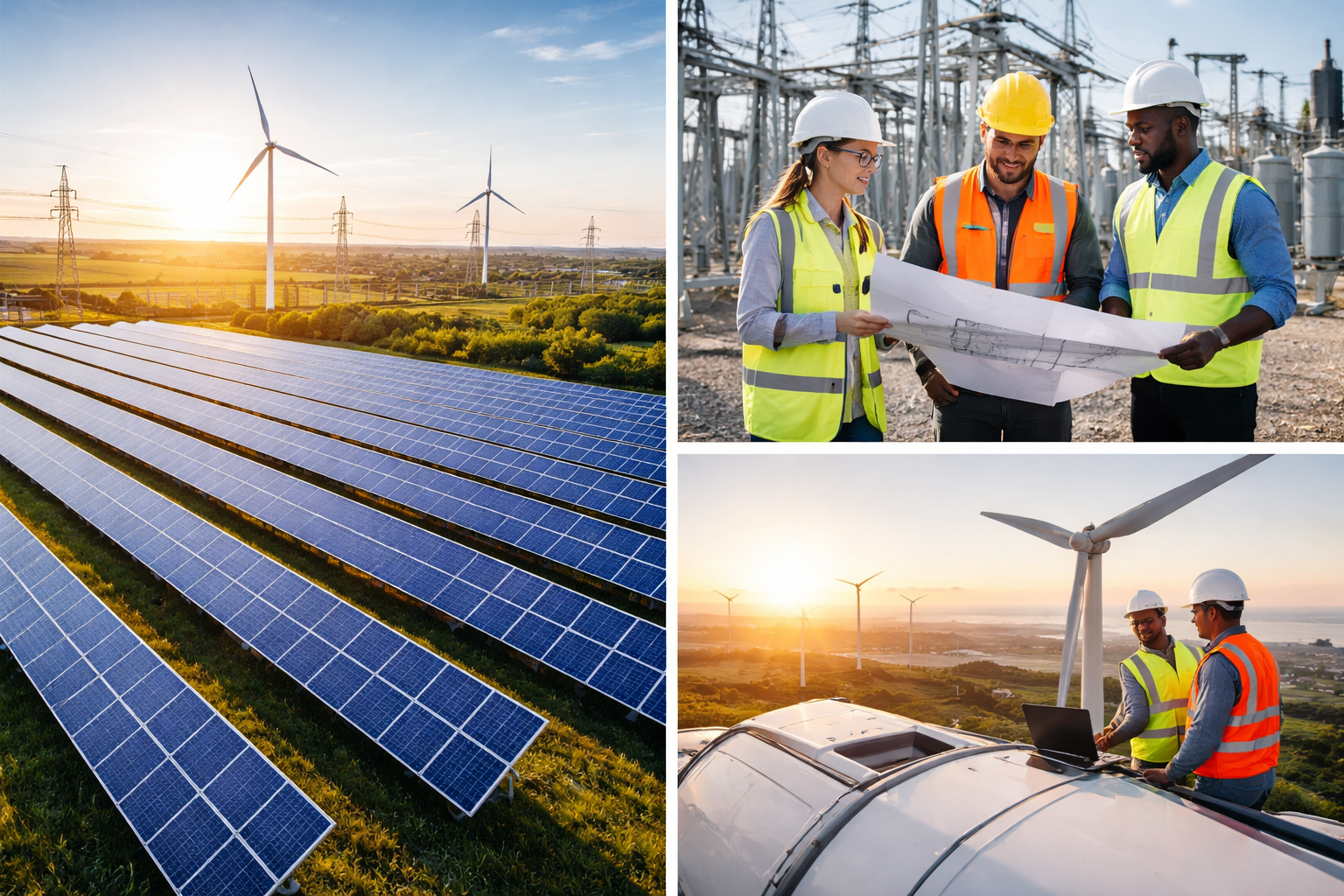
Solar panels and wind turbines with engineers working on a project.

Skills shortages continue to shape delivery timelines


While the pipeline of work is strong, access to skilled professionals remains one of the sector’s biggest constraints. The demand for experienced engineers, supervisors and project specialists across solar, wind and wider production environments continues to outstrip supply.


This is not a short-term issue. An ageing workforce, increased competition between projects and evolving technical requirements mean that workforce planning must be proactive rather than reactive. Clients are increasingly looking for partners who can provide compliant, project-ready talent — individuals who understand safety, quality and delivery expectations from day one.


For candidates, this environment presents real opportunity. Those with the right skills, certifications and site experience are well positioned to build long-term careers in a sector that offers stability, progression and purpose.


Delivery confidence matters more than ever


With Energy & Power projects under greater public and regulatory scrutiny, confidence in delivery has become a differentiator. Clients are prioritising partners who can demonstrate a track record of safe, compliant and efficient delivery across complex environments.


This extends beyond recruitment alone. Strategic workforce planning, mobilisation support and long-term collaboration are increasingly seen as essential components of successful projects. The ability to scale teams responsibly, respond to change and maintain continuity is what keeps programmes on track.


What this means for the wider industry


The Energy & Power sector is entering a phase where execution matters as much as ambition. Technology will continue to evolve, but it is skilled people, strong leadership and dependable delivery models that will determine success.


For organisations investing in renewables and infrastructure, now is the time to think beyond short-term resourcing and towards sustainable workforce strategies. For professionals within the sector, the coming years offer opportunities to work on projects that genuinely shape the UK’s energy future.


Deploy’s perspective


At Deploy, we see first-hand how the right people make the difference in Energy & Power projects. As a strategic delivery partner, we support clients and professionals across solar, wind and wider production environments with compliant, specialist talent that enables projects to move forward with confidence.


Our focus is on long-term collaboration, safety-led delivery and practical solutions that work on site — not just on paper. As the sector continues to evolve, we remain committed to supporting the people and projects driving the UK’s energy transition.


Get in touch to discuss how we can help support your next Energy & Power project.



Sunset over a power grid with wind turbines, solar panels, and electrical towers.
By Kieran Smith January 28, 2026
How strategic workforce planning helps Energy & Power clients deliver wind, solar and EV projects safely, efficiently and at scale across the UK.
Railroad tracks receding into the distance, lit by signal lights, with the word
By Kieran Smith January 26, 2026
Discover why safety-critical and signalling roles are shaping rail careers in 2026. Insights for rail professionals looking for long-term, compliant opportunities.
Construction worker in safety gear looking at a building under construction, cranes in background.
January 23, 2026
Career advice for professionals ready to step into project leadership roles across infrastructure, rail, engineering, and energy. Making the transition from a hands-on technical role to a project leadership position is one of the biggest and most rewarding steps you can take in your infrastructure career. Whether you’ve spent years on-site as an engineer, technician, operative, or specialist, there comes a point where you might start asking yourself: “What’s next for me?” “How do I move from delivering tasks to leading entire projects?” If you’re exploring the path toward becoming a Project Lead in Infrastructure, you’re not alone. Across the UK, organisations within the rail, energy, utilities, and major capital projects sectors are actively seeking professionals who understand the realities of site delivery and can translate that into strategic, people-centric leadership. This article will guide you through what the transition looks like, the challenges to expect, the skills you need to develop, and how Deploy can support your journey with the right recruitment assistance. The Transition: From Technical Expertise to Strategic Leadership Stepping into a project leadership role means shifting your focus from “doing the work” to guiding, planning, coordinating, and delivering. You already understand the technical realities of how a project should run, what can go wrong, and what excellence looks like. That is your foundation. Moving upward involves learning how to influence outcomes, steer teams, and adopt a more strategic mindset. This phase often comes with big questions: How do I demonstrate leadership experience if I’ve never held a leadership title? How do I balance technical depth with people and project skills? Am I ready to move beyond the tools and be accountable for budgets, timelines, and teams? The answer is yes—if you’re willing to build the right capabilities. Common Challenges When Moving Into Project Leadership Transitioning from a technical role to project leadership can feel overwhelming, especially when you’ve built your identity on being “the technical expert.” Some common challenges include: 1. Letting go of hands-on familiarity Many professionals struggle to step back and trust others to execute tasks they once did themselves. 2. Navigating people management Coordinating teams, resolving conflict, and motivating individuals requires a different skill set from technical delivery. 3. Understanding cost, risk, and programme management Leadership roles demand greater commercial awareness and the ability to think in terms of risk mitigation and long-term project outcomes. 4. Communicating with multiple stakeholders You’ll now be expected to communicate clearly with contractors, engineers, clients, senior leadership, and sometimes the public. 5. Shifting from task execution to strategic decision-making This means seeing the whole project picture—not just your discipline. These challenges are normal. They’re also surmountable once you know where to focus. Key Skills You Need to Master for Project Leadership Roles To become a strong contender for leadership positions in infrastructure, you need a balance of technical credibility, people skills, and strategic thinking. Here are the top competencies to develop: 1. Project Planning and Coordination Understanding how to create programmes, manage schedules, assign resources, and coordinate teams is essential. Look into: Project management frameworks (APM, PRINCE2) Risk and change management Procurement and contract basics (NEC, JCT) 2. Communication and Stakeholder Engagement You must be able to explain complex technical information in clear, concise language that different audiences can understand. This includes: Client communication Contractor briefing Cross-functional coordination Reporting and documentation 3. Leadership and People Skills Project leadership requires guiding a team toward common goals—even when under pressure. Key sub-skills: Delegation Conflict resolution Coaching and mentoring Motivating diverse teams 4. Commercial Awareness Leaders must understand budgets, cost controls, and commercial risks. Aim to get familiar with: Budget tracking Cost-value reconciliation Supply chain considerations Risk assessment 5. Strategic Thinking The ability to anticipate issues, plan, and make decisions that support the project's long-term vision. This includes: Identifying bottlenecks before they occur Scenario planning Understanding regulatory and compliance requirements How Deploy Supports Professionals Transitioning into Leadership At Deploy, we understand that career progression in infrastructure isn’t always linear. Many of the most successful Project Leads, Site Managers, and Delivery Managers didn’t start in meetings; they started on the tools. Our recruiters specialise in helping technical candidates bridge that gap by: ✔ Positioning your CV and experience to highlight leadership potential We help you translate your on-site accomplishments into leadership-ready achievements that speak the language of hiring managers. ✔ Matching you with employers who value your technical background We work across rail, civil engineering, energy, technology, and defence industries that are actively developing the next generation of project leaders. ✔ Advising you on certifications and training that boost your leadership readiness Whether you need APM, SMSTS, CSCS upgrades, or leadership courses, we help point you in the right direction. ✔ Supporting your long-term career goals Our goal is not just to place you into your next role—but to support your journey toward becoming a future project leader. Final Thoughts Transitioning from a technical role into project leadership is a bold and transformative step. You’re moving from executing tasks to shaping outcomes; from working on-site to influencing strategy; from being part of the project to leading the project. With the right skills, mindset, and support, you can make this transition smoothly and confidently. If you’re ready to explore leadership pathways in infrastructure, rail, energy, or engineering, Deploy is here to guide you every step of the way. Let’s help you take that next step from site to strategy.