


Powering the Transition: How Workforce Strategy Is Shaping the UK’s Energy & Power Future

From Ambition to Delivery


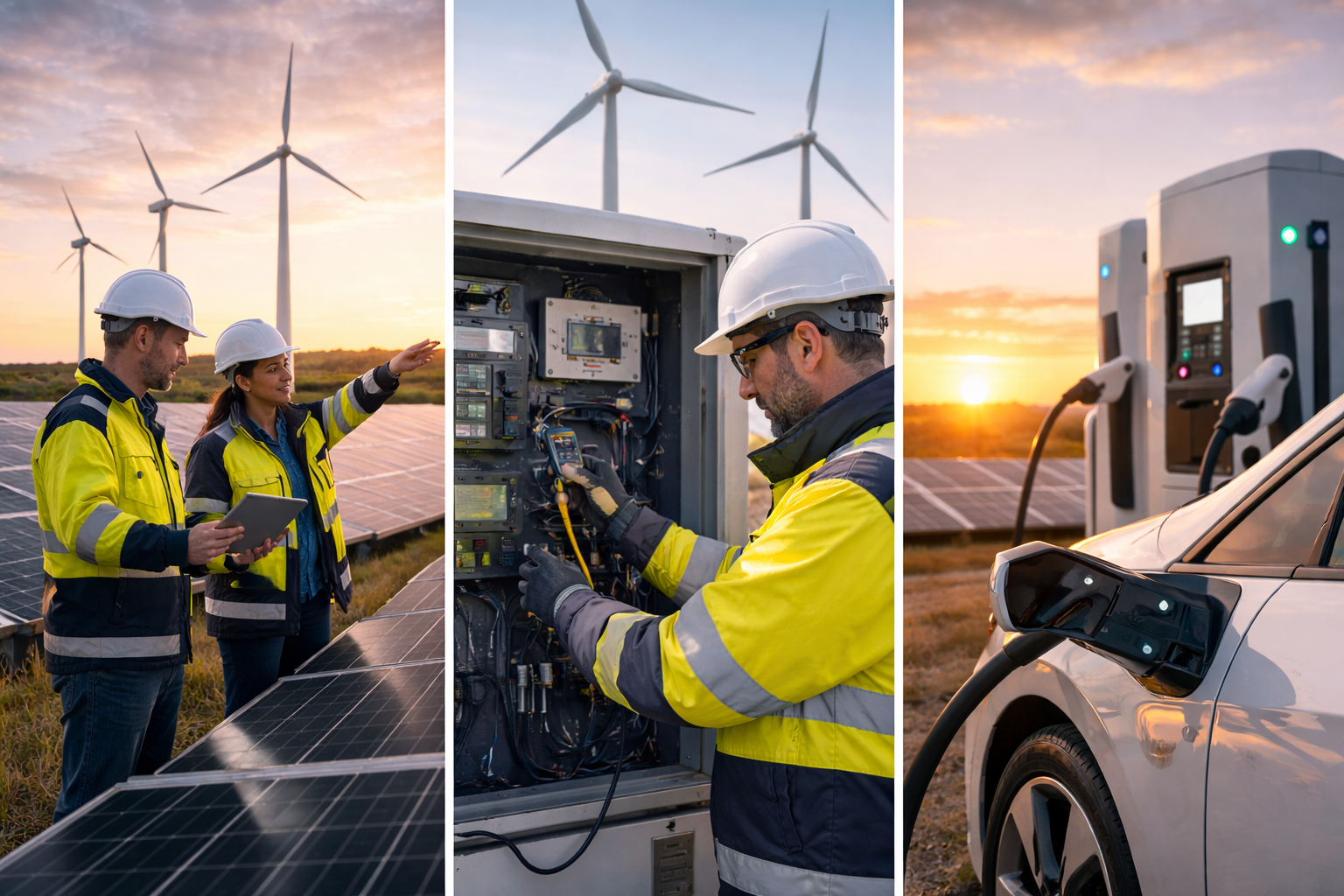
The UK’s Energy & Power (E&P) sector is entering a decisive phase. Net zero targets are no longer abstract policy goals — they are shaping real-world investment, infrastructure planning, and project timelines across the country. Solar farms are scaling up, wind projects are moving offshore and onshore at pace, and EV infrastructure is rapidly expanding to meet consumer demand.

Yet while technology continues to advance, a quieter challenge is emerging behind the scenes: having the right people in place to deliver these projects safely, compliantly, and on schedule. Workforce strategy has become one of the defining success factors for E&P delivery in 2026 and beyond.

The Energy Transition Is a People Challenge


The shift to low-carbon energy has introduced new technologies, but it has also increased complexity. Projects now require multidisciplinary teams that combine traditional power experience with emerging skill sets.


In areas such as solar and wind, this means engineers and technicians who understand grid integration, asset performance, and evolving compliance standards. For EV infrastructure, the challenge extends further — blending electrical expertise with civils coordination, network capacity planning, and public-facing delivery in live environments.


The result is a growing demand for specialist, compliant professionals who can operate confidently within regulated frameworks while adapting to new technologies.


Skills Shortages and Competition for Talent


As investment in Energy & Power accelerates, so too does competition for skilled individuals. Developers, contractors, and asset owners are often drawing from the same limited talent pools, particularly for experienced project managers, electrical specialists, and commissioning professionals.


This pressure can lead to short-term fixes — rushed onboarding, misaligned skill sets, or gaps in compliance — all of which introduce risk. In a sector where safety, quality, and programme certainty are critical, these compromises can have lasting consequences.


Forward-thinking organisations are responding by treating workforce planning as a strategic discipline, not a reactive task.


Why Compliance and Sector Expertise Matter


Energy & Power projects operate within tightly controlled regulatory environments. Whether delivering wind generation, solar assets, or EV charging networks, compliance is not optional — it is fundamental to protecting people, assets, and reputations.


This is where sector expertise becomes essential. Understanding the nuances of E&P delivery allows workforce partners to assess not just qualifications, but real-world project readiness. It ensures that skilled individuals are aligned to the technical, safety, and operational demands of each site.


At scale, this approach reduces downtime, improves handovers, and supports long-term asset performance.


Building Resilient Delivery Teams


Successful E&P programmes increasingly rely on long-term collaboration, rather than transactional resourcing. By working with a strategic delivery partner, organisations can build continuity across project phases — from early development through construction, commissioning, and ongoing operations.


This model supports better knowledge transfer, stronger safety cultures, and more predictable outcomes. It also allows teams to flex as programmes evolve, without losing capability or compliance.


In fast-moving sectors like EV and renewable generation, this adaptability is becoming a competitive advantage.


Deploy’s Insight: Planning for What’s Next


At Deploy, we work closely with clients and partners across the Energy & Power sector to plan, supply, and deliver specialist, compliant talent where it matters most. Our experience across solar, wind, and EV projects means we understand the pressures of live delivery — and the importance of getting it right first time.


As the energy transition continues, the organisations that succeed will be those that invest early in workforce strategy, align skills to technology, and prioritise safety and compliance at every stage.


Get in touch to discuss how we can support your Energy & Power projects with the right people, in the right place, at the right time.


White hard hat on a concrete block, with a construction site background.
January 13, 2026
If you’ve ever sat across from a panel of interviewers in the infrastructure, rail, or energy sector, you know that moment, the one where the room feels heavy with expectation. They’re not just looking for someone who can do the job; they’re looking for someone who understands the weight and purpose behind it. The UK’s infrastructure landscape is entering one of its most transformative eras, and so are the expectations placed on its workforce. According to the UK Infrastructure and Projects Authority (IPA) , over £700 billion worth of projects are in the pipeline for the next decade—ranging from high-speed rail and renewable energy to digital connectivity and water management. With this comes a surge in demand for skilled professionals who can bridge technical expertise with human understanding. So, what exactly do hiring managers want to hear in an interview? Let’s unpack that. Understanding What Employers Are Really Looking For In today’s competitive job market, hiring managers in the rail, energy, and infrastructure industries are looking beyond qualifications. They’re assessing three critical areas: technical proficiency, problem-solving ability, and cultural fit. They want to see that you understand the scale of the projects you’re applying to be part of, that you can think in systems, work collaboratively, and uphold safety and sustainability at every stage. The best candidates are those who can link their technical achievements to real-world impact: projects completed safely, budgets managed efficiently, and teams that grew stronger under their leadership. The Interview Questions That Really Matter You might expect to discuss your previous projects or certifications, but the questions that truly reveal who you are go deeper. Here are five examples of questions hiring managers often ask and what they really want to hear: “Can you describe a project where you overcame a major challenge?” They’re testing your resilience and creativity. Be specific. Share how you assessed the situation, involved the right people, and made decisions under pressure. “How do you ensure safety remains a top priority on-site?” They’re gauging your commitment to compliance and wellbeing. Hiring managers value candidates who can embed safety into culture, not just procedure. “Tell us about a time you collaborated across disciplines or teams.” Infrastructure projects are rarely solo efforts. This question explores how you communicate and coordinate with engineers, planners, and contractors to achieve aligned outcomes. “How do you handle scope changes or client demands mid-project?” Adaptability is key. They want to see that you can balance flexibility with control, protecting timelines and quality without compromising relationships. “What excites you most about working in infrastructure today?” Here’s where passion speaks. Your answer should show curiosity about emerging technologies like green energy solutions, digital modelling, or modular construction, and an eagerness to contribute to the sector’s evolution. When answering, remember this: employers don’t just want your credentials. They want your story. How did you grow, what did you learn, and how did your contribution make a difference? What Hiring Managers Listen For Beyond the Resume While your technical expertise in project management, design, or operations is crucial, hiring managers are just as attentive to your soft skills. The best candidates communicate not only what they did, but also how they did it. Employers want to hear about: The time you solved a complex site issue that wasn’t in the manual. When you stepped up to lead a team through unexpected change. How did you mentor someone to perform better and stay safe? These stories give life to your interview; they show self-awareness, leadership, and integrity. By blending hard data with human insight, you turn your answers into proof of value. Top Five Skills to Master in Today’s Infrastructure Market The infrastructure industry is evolving fast, shaped by sustainability goals, digital innovation, and global uncertainty. To stay ahead, focus on developing these five in-demand skills: Hard Skills: Project Delivery & Management – the ability to oversee complex, multi-phase projects efficiently. Digital & Data Literacy – familiarity with BIM, GIS, and data-driven decision tools. Health, Safety & Compliance Knowledge – a deep understanding of HSE regulations and risk management. Soft Skills: Collaborative Leadership – inspiring cross-functional teams to deliver results under pressure. Adaptability & Communication – managing change, uncertainty, and stakeholder relationships with confidence. These are the skills that separate good candidates from great ones, the professionals who don’t just fit the job description but elevate the project’s success. How Deploy Can Help You Build a Future in Infrastructure Navigating interviews in such a technical and fast-moving industry can feel daunting, but you don’t have to go it alone. At Deploy, we specialise in connecting skilled professionals with leading employers in infrastructure, rail, energy, and construction. Our consultants understand the language of this sector because they’ve lived it. We go beyond matching job titles; we align your capabilities, ambitions, and strengths with organisations that will help you grow. Whether you’re preparing for your next big interview or exploring a career move, Deploy provides the guidance and insight to help you make an impact. Ready to take the next step? Let Deploy help you prepare, position, and progress in your infrastructure career. Visit Deploy to explore current opportunities and get tailored career support.
By Kieran Smith December 24, 2025
Discover why Christmas rail possessions are critical to the Cambridge programme and how Deploy supplies compliant track workers to deliver safe, efficient festive-period works.
Train at a train station; yellow and white train car, red brick arches.
By Kieran Smith December 17, 2025
Discover how modern signalling and telecoms, safety-critical teams, and effective possession planning are transforming rail reliability — and how Deploy supports specialist delivery.